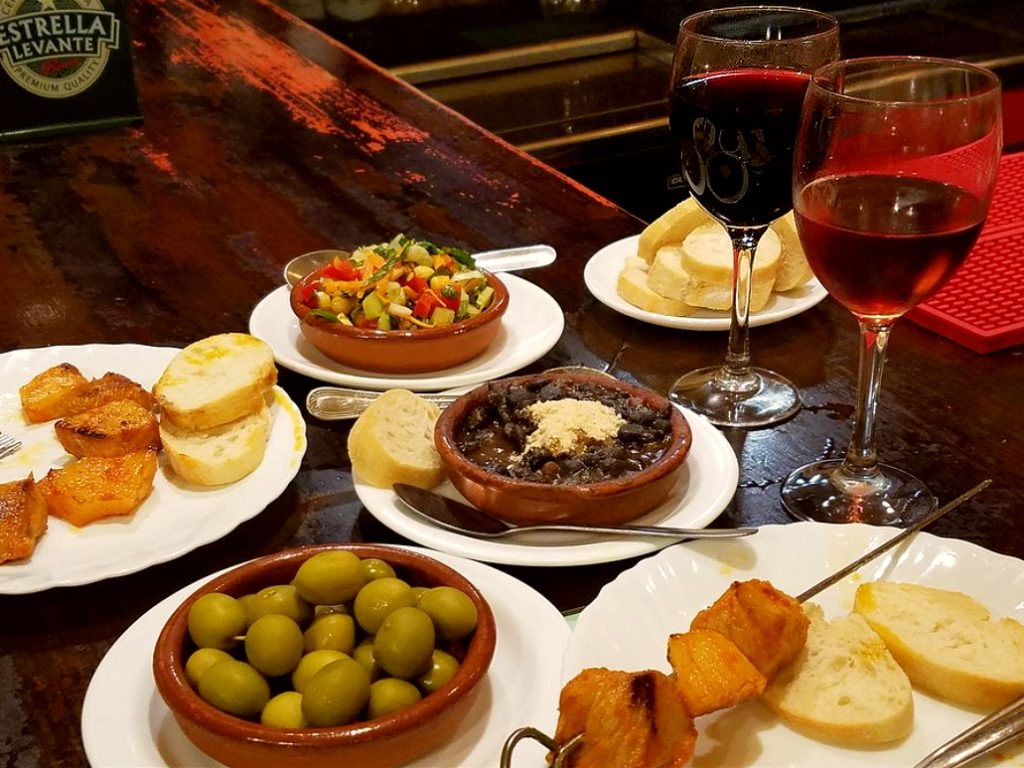
Tapas has grown into a global phenomenon. From its humble background in Spain as a bit of free bread and cheese or ham to put on top of your beer to a cuisine in its own right. Found in restaurants in every corner of the world.
It’s not outlandish to say that the world of tapa has drifted away not only from its synonymous birthplace of Spain but also from what it represents. Once a simple snack for people to have with a cheap beer, it was especially important in the South during the Spanish Civil War when food was scarce. Now tapas restaurants are sophisticated places, where a few shared dishes can set you back a pretty penny, especially outside of Spain.
If you go to a tapería in most Spanish cities you are not going to pay as much but it certainly isn’t what it was, free. There is one city, however, where one can walk into a bar and not hope but expect a small free plate of food with every drink. That city is Granada. It’s not just a piece of bread and cheese either. Croquetas, falafel, pork loin, hot stews, cold gazpachos, bravas, Spanish omelette and jamon are all served for free.
Almería may argue with that statement, but the distinction lies in the word ‘expect ‘.
It’s something that the city prides itself on. People of Granada don’t refer to paid tapas as tapas, the Basque have a version of paid tapas called pinchos that seems to Granadinos as correctly distinct from its supposedly free southern equivalent.
In a world where energy prices are skyrocketing, raw ingredient costs are rising and the price of olive oil, used as a garnish or cooking oil for almost every Spanish dish, shot up by 115% last year, is the tapas culture of Granada under threat? Not only that but because of tapas, many bars in Granada need to have a constantly operational kitchen or food preparation area and many need at least one extra staff member to keep the food flowing.
It sounds unsustainable, and the last bastion of free tapas was thrown into extreme doubt after the pandemic wrought financial havoc on the bars of touristy cities such as Granada. The then city mayor, Paco Cuenca said, “The city council will no longer promote free tapas. Never again.” Going on to say, “One has to pay for tapas because they’re haute cuisine,” he added, “That’s what leads to profitability and creates stable jobs.”
That was in early 2022, so what has happened since? Well, for one Cuenca is no longer mayor. There is obviously more than one reason for that but his comments about the city’s cherished tapas culture caused a massive backlash and well, it probably didn’t help. The previously mentioned challenges still persist, however, and they have had an effect.
The biggest of which is that portions have, overall, decreased in size. Where once one couldn’t see the plate below their mound of bravas, the plate is now visible. Some independent tapas places have unfortunately had to close and paid options are now much more common. In general, though, tapas is still alive a buzzing.
Partly because visitor numbers are back to pre-pandemic levels and partly, one would imagine, down to a game of who blinks first. Residents of Granada choose which bars to go to based on the tapas they serve. Sure price, décor, regulars and all the other stuff still matter but Granada bars have this additional, arguably more important, variable. In a city that reportedly has more bars per person than every other city in Andalucia, attracting customers to your establishment and away from the thousands of others is key. Not serving tapas is not a good way to go about that.
Unfortunately, the droughts and wars that have caused the sharp increases in the price of oil and other ingredients do not look like they are going to go away anytime soon.
Its saviour might come in Spanish pride. When a city in Spain has something unique and special they take enormous pride in it. Tapas did not used to be unique to Granada, but it certainly is now. This was made clear in the backlash to the ex-mayor’s comments. The reason it is unique in Granada is that every other city has seen the need or the opportunity to charge for tapas and who is to say, especially with modern pressures, that Granada, the last holdout for the tradition of tapas, won’t go the same way?
 Jake Garrett
Leave a comment